
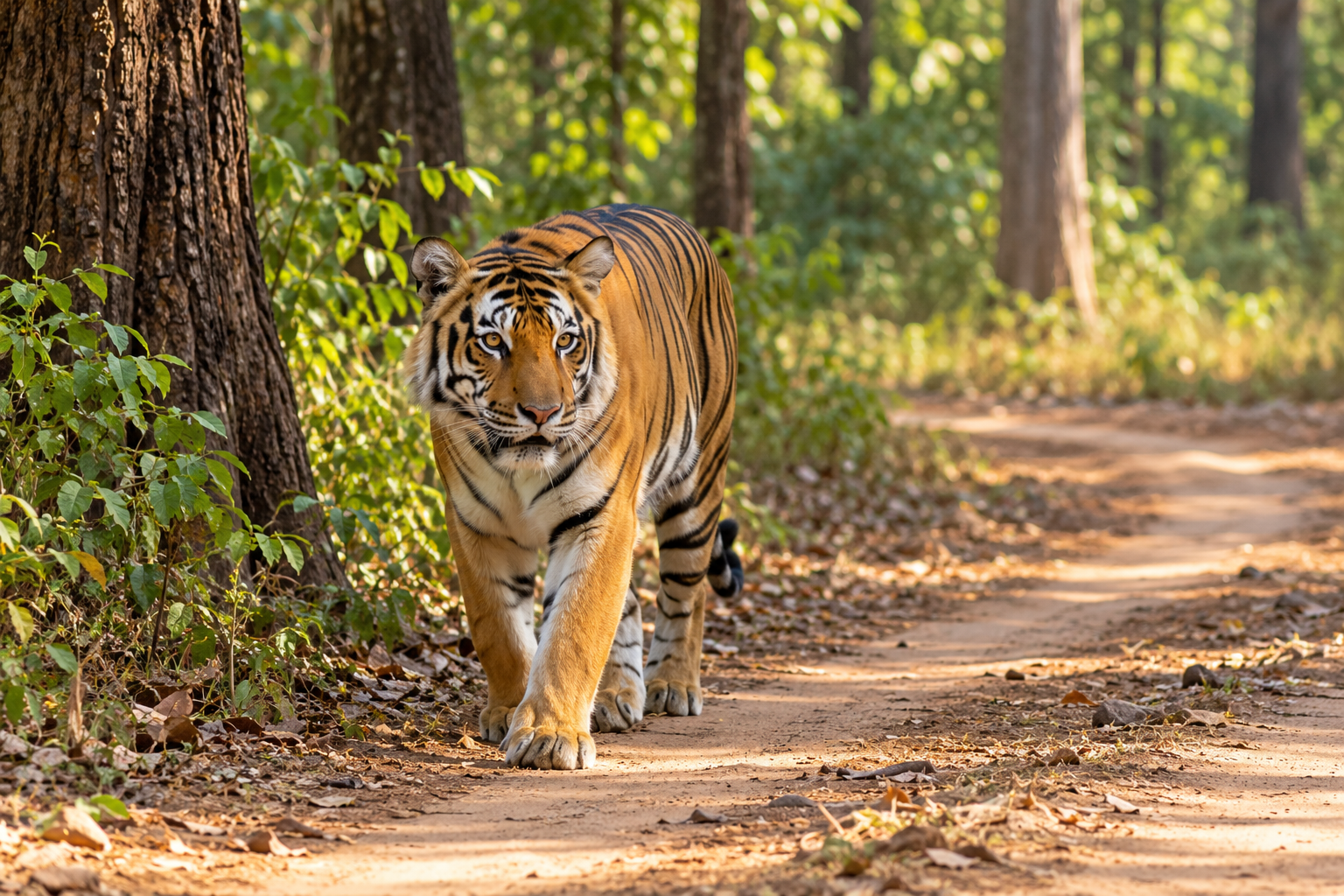
Tiger Sighting in Kanha: Best Zones, Months and Safari Slots
Tiger sighting in Kanha depends on wildlife movement, season, safari zone and luck. Kanha, Kisli, Mukki and Sarhi are popular safari zones, but no zone guarantees a tiger sighting. Warmer months may offer better visibility near water sources, while winter provides a beautiful forest experience. Both morning and afternoon safaris can be rewarding.
Kanha National Park is one of India's well-known destinations for observing Bengal tigers in their natural habitat.
Located in Madhya Pradesh, the park features sal forests, open grasslands, streams and diverse wildlife.
Visitors often arrive with one important question: What are the chances of seeing a tiger in Kanha?
Although Kanha supports a significant tiger population, sightings depend on several natural factors. Choosing a suitable safari zone, travelling during the right season and booking multiple safaris may improve your opportunities, but nothing guarantees a sighting.
This guide explains the best zones, months, safari timings and practical tips for planning your wildlife experience.
What Are the Chances of Tiger Sighting in Kanha?
Kanha offers opportunities to observe wild Bengal tigers, but sightings vary from one safari to another.
Tigers are territorial animals that move through forests, grasslands and water sources according to their natural behaviour.
A tiger may cross a safari road one morning and remain hidden deep inside the forest the following day.
Factors Affecting Tiger Sightings
1. Tiger movement
Tigers travel through their territories to hunt, rest, patrol and access water.
2. Weather conditions
Temperature and rainfall influence animal movement and vegetation density.
3. Forest visibility
Open grasslands and less dense vegetation may make wildlife easier to observe.
4. Safari timing
Morning and afternoon conditions affect animal activity, but neither shift guarantees a sighting.
5. Experience of the guide
An authorised guide may recognise tracks, alarm calls and other signs of wildlife activity.
However, no guide can control where a tiger appears.
Can You See a Tiger on Your First Safari?
Yes, it is possible.
Some visitors see a tiger during their first safari, while others complete several drives without a sighting.
There is no reliable universal percentage that accurately predicts an individual visitor's chances.
For this reason, enjoy the complete forest experience rather than judging the safari only by tiger sightings.
Best Zone for Tiger in Kanha National Park
Kanha National Park has several tourism zones, each offering a different forest landscape.
The four well-known core safari zones are Kanha, Kisli, Mukki and Sarhi.
All can offer opportunities to observe wildlife.
1. Kanha Zone
Kanha Zone is known for its scenic grasslands and forest landscapes.
The mixture of open areas and wooded sections provides opportunities to observe deer, barasingha, birds and occasionally tigers.
Its landscape makes it particularly attractive to wildlife photographers.
2. Kisli Zone
Kisli features forest roads and a variety of habitats.
Visitors may encounter spotted deer, sambar, langurs, wild boar and other wildlife.
Tiger sightings are possible, depending on the animals' movements.
3. Mukki Zone
Mukki is another popular safari zone.
Its forest habitat and wildlife activity attract visitors interested in tiger safaris.
However, past sightings do not guarantee that a tiger will appear during your visit.
4. Sarhi Zone
Sarhi offers a forest experience that may appeal to visitors seeking wildlife observation and natural scenery.
Like the other zones, sightings depend on current animal activity and visibility.
Kanha Safari Zone Comparison
| Safari Zone | Main Attraction | Tiger Sighting Potential |
|---|---|---|
| Kanha | Grasslands, forests, and diverse wildlife | Possible; not guaranteed |
| Kisli | Forest landscapes and wildlife trails | Possible; not guaranteed |
| Mukki | Forest habitat and wildlife viewing | Possible; not guaranteed |
| Sarhi | Forest scenery and wildlife diversity | Possible; not guaranteed |
Which Zone Has the Highest Tiger Sighting Chances?
There is no permanently reliable answer to the question of the best zone for tiger in kanha.
Tiger territories and movement patterns change over time.
A zone that produces several sightings during one week may be quiet the next.
Recent observations from authorised guides can provide useful context, but they should not be treated as guarantees.
For a more detailed comparison, read the Kanha Safari Zones Guide.
Best Months for Tiger Sighting in Kanha
The season influences forest conditions and wildlife visibility.
Different months offer different advantages.
November to February: Winter Safari
Winter brings cool mornings, pleasant daytime conditions and attractive forest scenery.
The vegetation may remain relatively dense in some areas after the monsoon.
Visitors can enjoy wildlife photography, birdwatching and the peaceful forest atmosphere.
However, early-morning safaris can be very cold.
March to April: Warmer Weather
As temperatures rise, forest conditions begin changing.
Some vegetation becomes less dense, and animals may visit water sources more frequently.
This can create useful wildlife-viewing opportunities.
May to June: Summer Safari
The hotter months can offer improved visibility in some habitats as vegetation dries and animals seek water.
Tigers may spend time near water sources to cool themselves.
However, high temperatures can make afternoon safaris uncomfortable.
Wildlife movement remains unpredictable.
July to September: Monsoon Restrictions
Core tourism zones are generally closed during the main monsoon period, although exact dates and permitted activities depend on current forest department regulations.
Some buffer tourism arrangements may operate under separate rules.
Always verify the current schedule before planning a visit.
Seasonal Comparison
| Season | Forest Conditions | Visitor Experience |
|---|---|---|
| October–February | Green landscapes and cooler weather | Comfortable daytime wildlife viewing |
| March–April | Increasing warmth and changing vegetation | Good opportunities for varied wildlife observation |
| May–June | Hot, often drier conditions | Potential visibility near water sources |
| July–September | Monsoon restrictions in core areas | Check official operating rules |
Important: No month guarantees tiger sightings. Seasonal patterns indicate possible viewing conditions, not confirmed sighting probabilities.
Morning vs Evening Safari: Which Is Better for Tigers?
Both safari shifts can provide memorable wildlife experiences.
The choice depends on weather, available permits and personal preferences.
Morning Safari
Morning safaris begin early, according to the season's official reporting schedule.
Possible advantages include:
-
Cooler temperatures
-
Fresh animal tracks
-
Pleasant early light for photography
-
Opportunities to observe wildlife activity
Winter mornings can be particularly cold, so warm clothing is essential.
Afternoon Safari
Afternoon safaris offer changing light and different forest conditions.
Possible advantages include:
-
Warmer temperatures during winter
-
Opportunities to observe animals near water
-
Golden-hour photography in suitable conditions
-
A different wildlife experience from the morning shift
During summer, afternoon temperatures may be very high.
Which Safari Slot Should You Choose?
If possible, book one morning and one afternoon safari.
This allows you to experience different conditions without relying on a single outing.
The best slot is ultimately the one that matches available permits, weather conditions and your travel schedule.
How Many Safaris Should You Book to Improve Your Chances?
Visitors primarily interested in tiger sighting in kanha should consider more than one safari if their schedule and budget allow.
Multiple safaris create additional opportunities to encounter wildlife.
However, booking several drives does not guarantee a tiger.
Suggested Safari Planning
| Trip Duration | Suggested Safari Plan |
|---|---|
| 1 night | One safari, depending on arrival and departure |
| 2 nights | Two safaris, if permits are available |
| 3 nights | Two or three safaris with adequate rest |
| 4 nights | Multiple safari shifts across available dates |
Booking different zones may provide varied landscapes, but switching zones is not a proven way to guarantee more tiger sightings.
For families with children, avoid scheduling too many early mornings without sufficient rest.
Tips for a Successful Kanha Tiger Safari
A good kanha tiger safari involves patience, observation and respect for wildlife.
1. Book Safari Permits Early
Popular dates and zones can fill quickly, particularly during weekends and holidays.
Check the official booking portal before finalising travel.
2. Follow Your Guide's Instructions
Authorised guides understand park rules and may recognise wildlife signs.
Listen carefully and avoid distracting them while they are observing the forest.
3. Stay Quiet During Wildlife Encounters
Loud conversations and unnecessary movement may disturb animals.
Quiet observation also makes the safari more enjoyable.
4. Avoid Flash Photography
Follow all photography restrictions and avoid disturbing wildlife for a better picture.
5. Carry Binoculars
Binoculars can help you observe distant wildlife and birds.
6. Wear Comfortable Clothing
Choose suitable outdoor clothing and carry warm layers during winter.
7. Respect Park Rules
Never feed wildlife, litter, request off-route driving or pressure guides to approach animals.
8. Enjoy Other Wildlife
Kanha is home to barasingha, gaur, deer, wild dogs, langurs and numerous bird species.
A safari can be rewarding even without a tiger sighting.
How to Book Kanha Tiger Safari Permits
Safari permits are managed through the authorised Madhya Pradesh forest tourism booking system.
Visitors should confirm available dates, zones, shifts and identification requirements before travelling.
Booking Steps
-
Visit the official safari booking portal.
-
Select Kanha National Park.
-
Choose the preferred date and available tourism zone.
-
Select the safari shift.
-
Enter the required visitor details.
-
Complete payment through the authorised system.
-
Save the permit and carry the required original identification.
Vehicle and guide arrangements may involve additional charges, depending on the booking category and current rules.
Check the latest requirements before making payment.
Official portal: Madhya Pradesh Forest Department Safari Booking.
For travel planning assistance, explore the Kanha Safari Booking page.
Planning a Tiger Safari Stay at Kanha Resort
Accommodation planning is an important part of a successful wildlife holiday.
Staying near a suitable park entrance can help reduce early-morning travel, although the best location depends on the gate assigned to your safari permit.
Visitors should confirm the safari gate, reporting time and travel arrangements before departure.
At Kanha Resort, travellers can explore accommodation options and enquire about safari planning assistance.
When planning your stay, consider:
-
Number of safari shifts
-
Distance to the assigned entrance gate
-
Early breakfast arrangements
-
Vehicle availability
-
Winter clothing requirements
-
Rest time between safaris
A well-organised itinerary helps you enjoy the forest without unnecessary rushing.
Frequently Asked Questions
1. Which Zone Is Best for Tiger Sighting in Kanha?
Kanha, Kisli, Mukki, and Sarhi all offer opportunities to see tigers. No zone guarantees sightings, and wildlife activity changes over time. Choose based on permit availability and current park conditions.
2. What Is the Best Month to See Tigers in Kanha?
Warmer months such as March, April, and May may offer improved visibility in some areas, particularly near water sources. However, tigers can be seen in other open-season months as well.
3. Is Morning or Evening Safari Better for Tiger Sightings?
Both shifts can produce sightings. Morning safaris offer cooler temperatures and early light, while afternoon drives provide different wildlife activity and lighting conditions. Neither is consistently guaranteed to be better.
4. How Many Safaris Should I Book in Kanha?
Two or three safaris can provide more opportunities to observe wildlife than a single drive. However, additional safaris do not guarantee a tiger sighting.
5. Are Tiger Sightings Guaranteed in Kanha National Park?
No. Tigers are wild animals that move freely through their habitat. Sightings depend on natural behaviour, weather, vegetation, and chance. Ethical safari operators should never promise a guaranteed tiger encounter.
Conclusion
Tiger sighting in Kanha are one of the most exciting possibilities of visiting this famous wildlife destination.
Kanha, Kisli, Mukki and Sarhi offer different forest experiences, while the season and safari timing influence visibility and comfort.
Warmer months may provide favourable conditions near water sources, but tiger sightings remain unpredictable throughout the tourism season.
For a better overall experience, book permits early, consider multiple safari shifts, and follow responsible wildlife-viewing practices.
Visitors can explore Kanha Safari Booking and Kanha Safari Zones while planning their trip.
The best Kanha safari is one that respects wildlife, enjoys the entire forest and treats every tiger sighting as a special opportunity rather than a guarantee.
Planning a jungle safari?
Kanha Resort is 2 km from Khatia Gate. See zones, timings and permits in our Kanha safari booking guide, or check the Kanha Resort tariff for your stay.
WhatsApp for safari booking